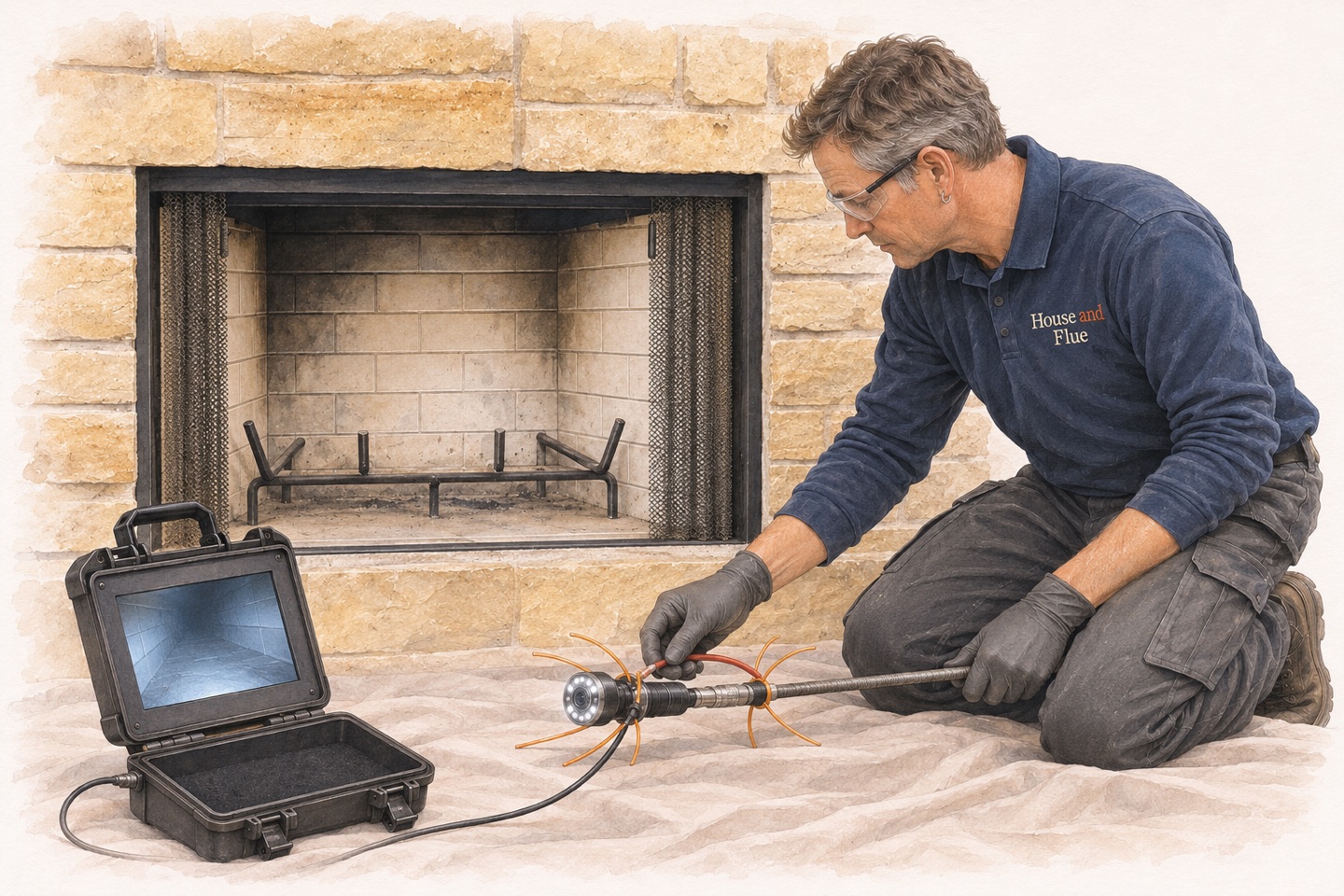
Three levels, different access
NFPA 211 describes inspection levels by circumstances, access and scope. In the reviewed 2019 edition, Level I concerns readily accessible areas under continued-use conditions; Level II adds accessible areas and internal flue evaluation; Level III addresses necessary concealed areas when earlier levels cannot resolve the concern. A camera alone does not establish a complete level. These are dated summaries, not a specification or local-code determination for your property.
NFPA 211 — inspection scope, 2019 editionStart with the reason for the visit
Explain whether this is routine care, a home purchase, a change of appliance, or a response to a problem. Those are different starting points. Ask the professional to identify the appropriate scope instead of ordering a level solely because it sounds more thorough.
A report should help you make a decision
NCSG recommends a written inspection report with photographs. Look for a clear connection between each observation and recommendation. Our suggested questions are:
- Which fireplace, appliance and flue were examined?
- What inspection level and methods were used?
- Which locations do the photographs show?
- What could not be accessed or evaluated?
- What finding supports each recommendation?
- What further assessment or work is being proposed?
Photographs need context
A close-up is easier to understand when the report identifies its location. Ask whether a picture shows the firebox, smoke chamber, liner, chimney top or another component. Use our cutaway to learn the vocabulary, then ask the inspector to explain how it applies to your own system.
Keep the records together
Retain the inspection scope, report, photographs and any later work records. When another professional visits, that history can make it easier to identify what changed and which questions remain open.
Questions homeowners ask
How should I check a professional’s qualifications?
Start with the NCSG homeowner resources to check company membership and individual chimney credentials. They are different: a member business may employ people who are not certified. Ask who will inspect your system and verify that person’s qualifications for the work.
NCSG — Homeowners ClubWhere does NFI certification fit?
NFI provides credentials for hearth planning and installation, including woodburning, gas and pellet specialties. It is a useful resource when a fireplace, stove or insert project is involved. Ask which credential matches the proposed work; certification is not a license or a guarantee of competence.
NFI — Information for homeownersIs a camera scan the same as a complete inspection?
Ask what the scan covers and what other parts of the inspection are included. The method alone does not describe the whole scope.
Can a webpage tell me my fireplace is safe?
No. General information cannot establish the condition, configuration or suitability of a particular system.
Does House & Flue offer inspections?
Not currently. This is an informational guide, not an inspection booking page.
Sources & reading
Sources checked November 24, 2026. Confirm current official guidance for your property and proposed work.
- NCSG — Homeowners ClubFind member businesses and verify individual chimney credentials; membership and certification are distinct.
- NCSG — Choosing a reputable chimney companyQuestions about qualifications, insurance and written inspection reports with photographs.
- NFI — Information for homeownersHearth planning and installation credentials, including woodburning, gas and pellet specialties. Certification is not a license or guarantee of competence.
- NFPA 211 — inspection scope, 2019 editionReviewed 2019 edition, §§15.1–15.5. NFPA lists 2027 as current; full 2027 provisions have not been reviewed here. Confirm the applicable edition, local requirements and product instructions.
Have an inspection report?
Match the findings to the evidence, understand the limits and prepare your next questions.
Understand your inspection report