Your questions, answered
Understand the work.
Know what to ask.
Open a question for the short answer, practical detail and supporting sources.
When does a chimney need sweeping?
Start with how the system is used and what the inspection finds.
How often should I have my wood-burning chimney swept?
Arrange an inspection each year; cleaning is based on deposits and condition, rather than a fixed number of fires.
Annual inspection guidance calls for sweeping and repairs when needed. Tell the professional how often you burn, what fuel you use and when the system was last checked. Ask what finding makes cleaning necessary now.
Homeowner FAQsDoes a rarely used fireplace still need inspection?
Yes. Low use does not rule out deterioration or an obstruction.
Animals can nest in a flue even when a fireplace is seldom used. If the service history is unknown, explain that before the visit rather than assuming the passage is clear.
Homeowner FAQsWhat is creosote, and why does it matter?
Creosote is combustible residue from wood-burning exhaust that collects inside a chimney.
Deposits can be flaky, sticky or hardened and shiny. Unseasoned wood, restricted airflow and cooler chimney conditions can encourage buildup. The amount and form of the deposit matter; a photograph of the firebox alone does not establish the condition of the entire flue. Ask the sweep to identify the deposits, their location and the proposed method of removal.
Preventing chimney firesCan better firewood reduce buildup?
Dry wood supports better combustion, but it does not replace chimney inspection or cleaning.
EPA’s archived Burn Wise guidance recommends wood with a moisture content below 20 percent and checking it with a moisture meter. Avoid wet wood, household rubbish, and painted or treated timber. Follow the operating instructions for your particular fireplace, stove or insert; advice for one appliance may not fit another.
EPA — Best wood-burning practices (archived guidance)What does a chimney sweep actually do?
Separate cleaning, inspection and repairs when you compare a proposed scope.
Which parts should a complete chimney sweeping include?
A complete sweeping includes the flue and smoke chamber, not just the visible firebox.
Ask the provider to identify the fireplace and passage being cleaned, the accessible areas included, and any limits or extra work. A clean-looking opening is not a record of work farther up the chimney.
Homeowner FAQsIs sweeping the same as a chimney inspection?
No. Cleaning removes deposits; inspection evaluates the system within a defined scope.
Inspection guidance describes Level 1 for continued use under the same conditions, Level 2 for circumstances such as a property transfer, system changes or a potentially damaging event, and Level 3 when a suspected concealed hazard needs more invasive access. A camera scan can be part of an inspection, but it does not describe the whole inspection by itself. Ask which level is included and why it fits your situation.
Levels of inspectionHow is dust kept out of the room?
Ask the professional to explain their floor protection and dust-control setup before work begins.
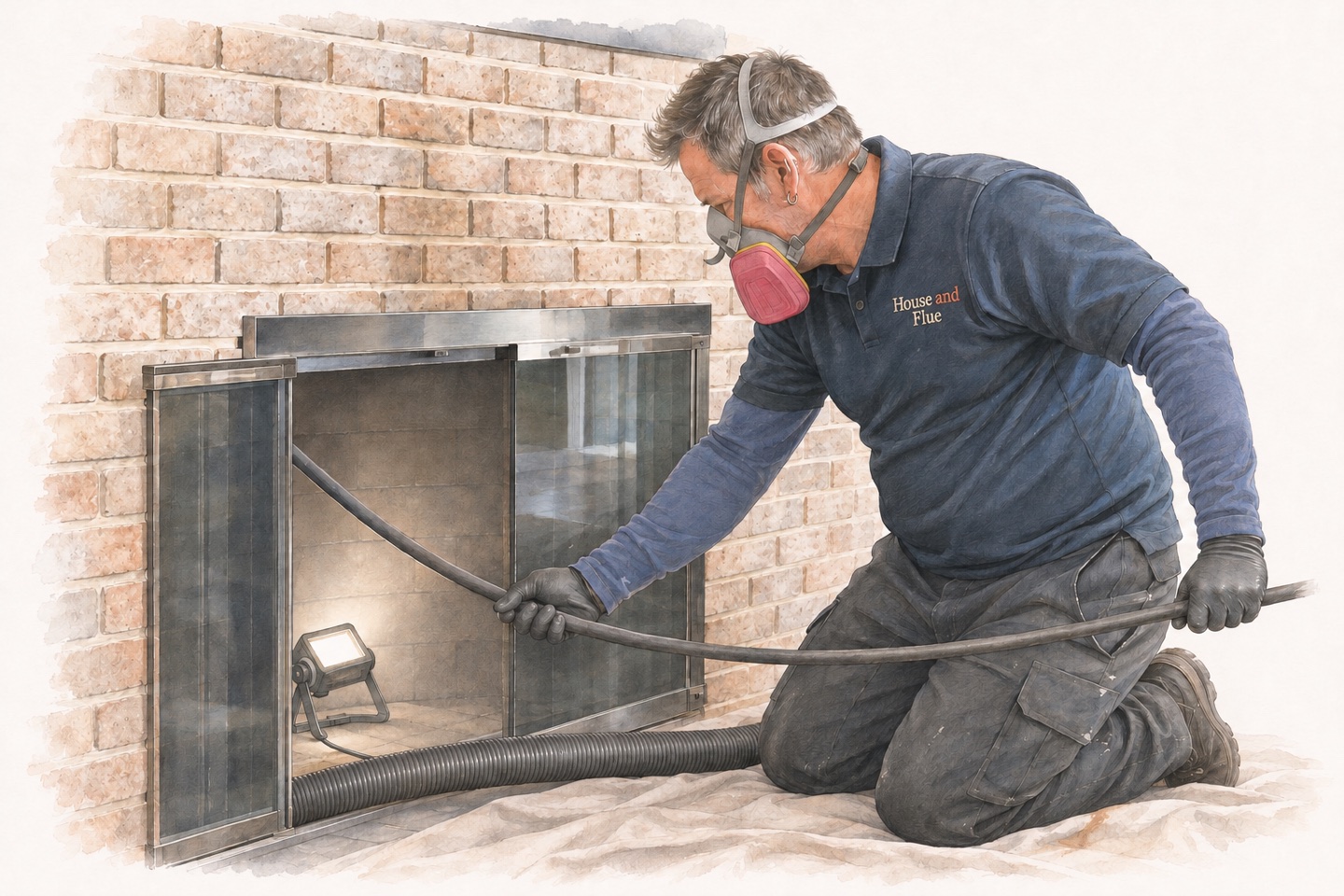
Drop cloths and vacuums are among the equipment used by modern sweeps. The exact setup depends on the fireplace and work. In our illustration, the technician uses a rod with a separate vacuum hose beside the hearth; the drawing shows part of a visit, not every step or containment detail. Let the company know about delicate furnishings and access restrictions in advance.
After a chimney fireCan a chimney-cleaning log replace a professional sweep?
No. CSIA does not recommend chemical products as a substitute for mechanical cleaning and inspection.
Ask about any product you have used before the visit. Do not treat a product’s use as confirmation that the flue has been examined or cleared.
Homeowner FAQsWhat should I ask before and after the visit?
Use these editorial checklists to make the scope and findings easier to understand.
Which qualifications should I ask a chimney professional about?
Ask who will do the work and verify that person’s current credentials for the proposed job.
The National Chimney Sweep Guild (NCSG) offers homeowner resources and directories for member businesses and certified individuals. Company membership does not mean every employee is certified. The National Fireplace Institute (NFI) is another useful resource, especially for fireplace, stove and insert planning or installation. Ask about the relevant fuel specialty; NFI certification is not a license or a guarantee of competence.
NCSG — Homeowners ClubNFI — Information for homeownersHow should I prepare for a chimney sweep?
Ask the company for its preparation instructions when arranging the visit.
Confirm how long the fireplace must be out of use and fully cooled, how much space they need around the hearth, and whether they want you to leave ashes in place. Keep children and pets away from the work area. Gather earlier reports and the make or model of any insert or stove. Mention smoke, odors, leaks, unusual noises and changes since the previous visit; avoid making a fire just to demonstrate a problem.
- Identify every fireplace or appliance you want addressed.
- Ask which indoor, outdoor or roof areas need access.
- Move fragile belongings according to the company’s instructions.
- Have previous findings and work records ready.
How much does sweeping cost, and how long does it take?
Request a quote and appointment window for your actual system and the agreed work.
House & Flue does not currently offer appointments or publish a service price. We have not verified a representative local price or duration survey. A useful estimate identifies the number of systems, cleaning scope, inspection level, access arrangements and how additional findings are handled. Compare those details before comparing totals, and ask whether the stated time includes inspection and documentation.
What should I receive after the visit?
Ask for a clear record of what was cleaned, what was examined and what remains unresolved.
NCSG recommends asking for a written inspection report with photographs. Use the checklist below to clarify the record you will receive. If repairs are proposed, ask for the observation and location supporting each recommendation, plus a separate written scope. Keep the report with earlier records so future visits have useful context.
- The fireplace or appliance and flue addressed
- Cleaning performed and inspection scope
- Findings with identified locations and useful photographs
- Areas that could not be accessed or evaluated
- Any restrictions on use and recommended next steps
Will sweeping fix smoke, damage or a suspected chimney fire?
Those concerns need evaluation; do not assume a cleaning appointment alone resolves them.
If smoke is entering the room, stop using the fireplace and have the cause assessed. After a suspected chimney fire, CSIA advises against reuse until a qualified professional has swept and evaluated the chimney; damage can be hidden from the top and bottom. If you suspect an active fire, leave the building and call 911. Tell the company about these concerns before booking so it can plan the appropriate evaluation.
After a chimney fireEPA — Wood-burning installation and maintenance (archived guidance)Preventing chimney firesHow does this apply to my North Shore home?
The particular fireplace and its history matter more than the town name alone.
What should I ask about an older or recently purchased home?
Ask which fireplaces, liners and appliances are actually present, and which inspection scope fits the property’s history.
A house’s age or appearance does not establish whether its chimney has been relined, altered or maintained. Collect available reports and describe any changes you know about. CSIA identifies a sale or transfer as a circumstance for Level 2 inspection. If an ordinary home inspection mentioned the fireplace, ask exactly what that report covered before treating it as a chimney evaluation.
Levels of inspectionDoes sweeping one fireplace cover every flue in the house?
Confirm each system separately in the written scope.
Our house cutaway separates the main-floor fireplace, upstairs fireplace and basement utility passage. Use that distinction to list the systems at your address and ask which are included. A furnace or water-heater vent belongs in a separate discussion about the appliance and its venting requirements.
Where can I find information for my town?
Our town guides pair local context with official municipal resources.
Start with your town when a recommendation leads to exterior alterations, masonry repairs or other project questions. Confirm the requirements for the actual property and work with the municipality. These guides describe the publication’s local coverage, not current appointment availability.
Can I book chimney sweeping with House & Flue?
Not yet. House & Flue is currently an informational publication.
We publish homeowner guides for Chicago’s North Shore and nearby communities. The illustrated technician helps explain chimney care; the image is not a photograph of a House & Flue service visit. We are not accepting bookings or quoting work.
What does your report mean?
Connect the written findings, photographs and recommended next steps.
Read the annotated report guideSources & reading
Sources checked November 23, 2026. Confirm current official guidance for your property and proposed work.
- NCSG — Homeowners ClubFind member businesses and verify individual chimney credentials; membership and certification are distinct.
- NCSG — Choosing a reputable chimney companyQuestions about qualifications, insurance and written inspection reports with photographs.
- NFI — Information for homeownersHearth planning and installation credentials, including woodburning, gas and pellet specialties. Certification is not a license or guarantee of competence.
- CSIA — Homeowner FAQsInspection frequency, full sweeping scope and chemical cleaning products.
- CSIA — Preventing chimney firesCreosote, contributing conditions and chimney-fire concerns.
- CSIA — Levels of inspectionThe different scopes of Levels 1, 2 and 3, including property transfers and system changes.
- CSIA — After a chimney firePost-fire evaluation, documentation and examples of sweeping equipment. Its post-fire process is not the scope of every routine visit.
- EPA — Wood-burning installation and maintenance (archived guidance)Annual inspection and smoke concerns. Burn Wise ended in 2025; EPA states this program content is no longer updated.
- EPA — Best wood-burning practices (archived guidance)Dry wood, moisture measurement and materials to avoid burning. Historic Burn Wise guidance, no longer updated since October 30, 2025.