What does a top-sealing damper do?
A traditional throat damper sits just above the firebox. A top-sealing damper sits at the other end of the flue, on top of the chimney. Lock-Top is a brand name. You may also hear this type called an energy-saving chimney damper.
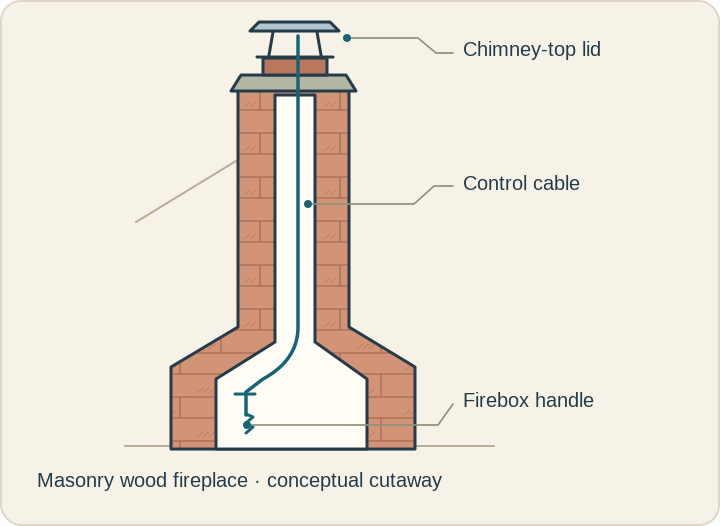
On a manual top-sealing damper, a handle and cable move a lid at the roof. When closed, the lid of a gasketed model seats against its frame, which can reduce the loss of heated or air-conditioned air when the fireplace is idle. It can be an option when the original throat damper is missing, damaged, or doesn’t seal well, provided the fireplace and chimney are compatible.
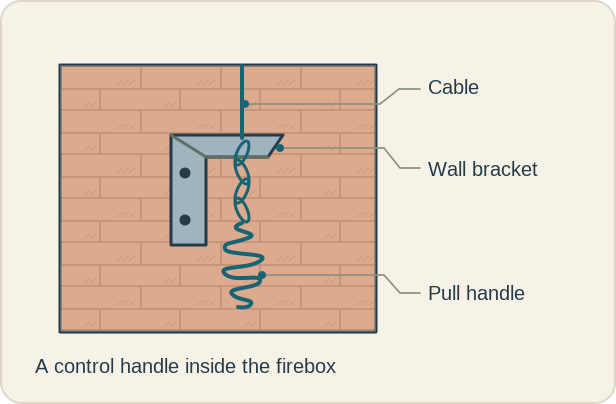
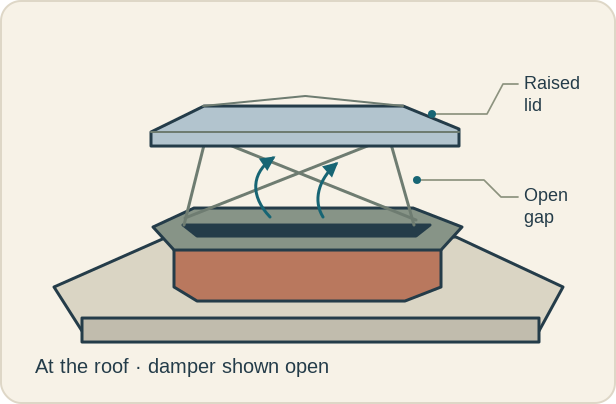
For wood burning, confirm the damper is fully open before lighting a fire. Leave it open until the fire is completely out and no embers remain. If you can’t confirm it opens, don’t light a fire. Lock-Top operating instructions
Why doesn’t a Lock-Top belong with vented gas logs?
Vented gas logs rely on the chimney to carry combustion gases outside. If a roof damper closes, exhaust can spill into the room. That exhaust can contain carbon monoxide, which you can’t see or smell. The Lock-Top instructions call for removing the damper when a fireplace is converted to a gas appliance such as gas logs. Leaving the handle unlatched is not a substitute for the specified venting setup. Lock-Top operating instructions
A gas-log damper clamp prevents the damper it’s attached to from closing all the way. A clamp on the throat damper does nothing to keep a second damper open at the top of the chimney. For example, the Real Fyre G4 manual requires a minimum permanent vent opening and separately calls for the damper to be fully open while the burner is operating. The minimum opening isn’t the operating position, and there’s no universal gap to copy from another fireplace. Follow the instructions for the exact burner and the applicable local code. Real Fyre G4 manual, pages 1 and 8
What if your fireplace already has both?
Don’t use the gas logs until a qualified gas-fireplace technician identifies the burner and checks the entire vent path, including the roof termination, against its installation instructions and local requirements. Don’t light the burner to test it or try to modify the roof damper yourself.
This guide covers vented gas logs in an existing fireplace. Vent-free log sets and sealed direct-vent inserts have separate instructions. The label alone doesn’t establish whether an existing damper arrangement is acceptable.
If a carbon monoxide alarm sounds, get everyone outside immediately, call 911 from outside, and don’t reenter until emergency responders say it’s safe. U.S. Consumer Product Safety Commission
Sources & reading
- Gelco Lyemance Lock-Top operating instructionsWood-fire operation and warning for gas conversions.
- Real Fyre G4 vented gas-log manualPermanent vent opening and fully open damper during operation.
- Real Fyre manuals by appliance typeSeparate documentation for vented logs, vent-free logs, and direct-vent inserts.
- CPSC carbon monoxide fact sheetWhat to do when a CO alarm sounds.